
Chasing the Shoebill: Your Complete Guide to Mabamba Swamp with Nile Abenteuer Safaris
Why this papyrus-choked wetland just outside Kampala offers the best shoebill odds anywhere on Earth — and how we get you there.
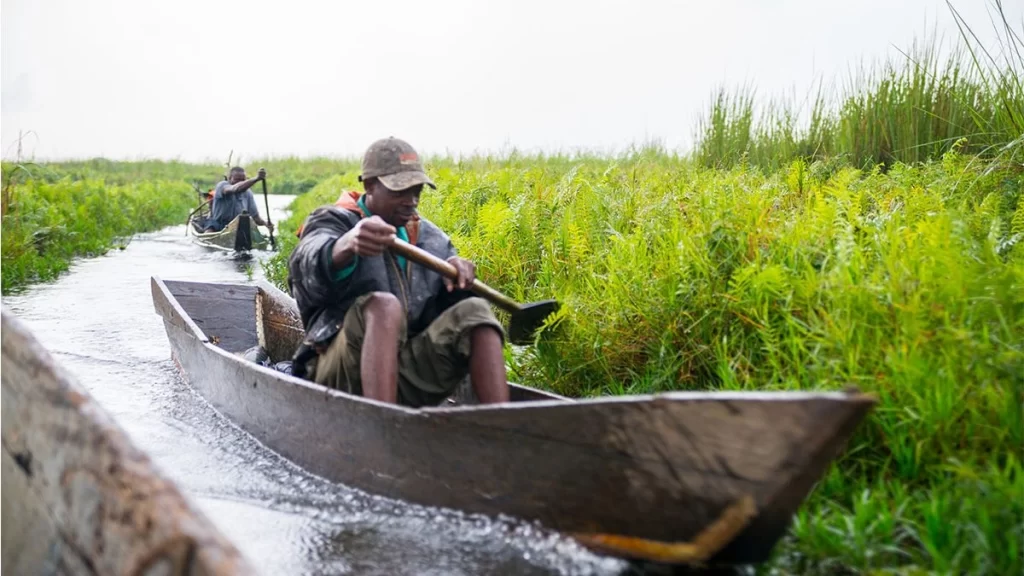
Mabamba's narrow channels are navigated quietly by canoe — the only way in.
If there's one bird that turns casual travelers into obsessive birders, it's the shoebill. Standing over a metre tall, with a boot-shaped bill that looks like it was carved rather than grown, Balaeniceps rex has a stillness to it that borders on unsettling — it can stand motionless for hours, waiting for a lungfish or baby crocodile to surface.
And the single best place on the planet to find one is a wetland most travelers have never heard of: Mabamba Bay, on the northern shore of Lake Victoria, less than two hours from Entebbe.
Why Mabamba Beats Every Other Shoebill Site
Shoebills are famously difficult birds — solitary, silent, and scattered thinly across the swamps of the Nile Basin. Most sites require days of searching with no guarantee. Mabamba is different. Local fishermen and guides have tracked individual shoebills' territories here for years, and our boat operators know exactly which papyrus channel to enter on a given morning.
The result: shoebill sighting rates at Mabamba consistently outperform almost anywhere else it's found, from the Bangweulu Wetlands in Zambia to the swamps of South Sudan.
What a Morning at Mabamba Looks Like
- Pre-dawn departure from Entebbe or Kampala to beat both the heat and the wind that picks up on the lake by mid-morning.
- Canoe transfer — motorized or paddled — winding through narrow corridors cut into the papyrus.
- Supporting cast along the way: African jacana walking on lily pads, purple swamphens, malachite kingfishers, and — if you're lucky — the elusive African rail.
- The main event: your guide cuts the engine, and you drift in near-silence toward a motionless grey shape at the water's edge.

Patience rewarded — a shoebill holding its position at the water's edge.
Best Time of Year
Shoebills are resident year-round at Mabamba, so there's no bad season for this particular sighting. That said, the dry months (December to February and June to August) make for calmer water and easier canoe access, while the wetter months bring higher water levels and lusher surrounding wetland scenery.
How Nile Abenteuer Safaris Builds This In
We schedule Mabamba as an early-morning excursion — either as a standalone day trip from Kampala or Entebbe, or as the opening leg of a longer birding circuit that continues on to Queen Elizabeth National Park and Semuliki. Our boatmen are chosen specifically for their shoebill-tracking record, not just general tourism experience, and we cap group sizes to keep canoes quiet and sightings unhurried.
Add a Mabamba shoebill morning to your Uganda itinerary.
Book your shoebill safari with Nile Abenteuer Safaris →