
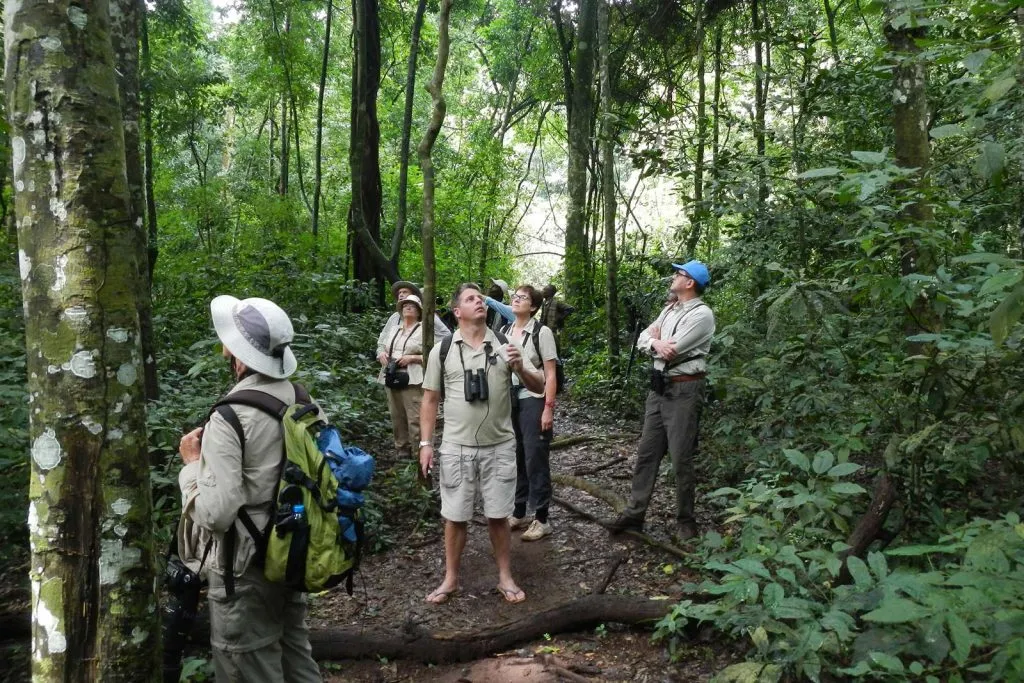
Quick answer: Kibale Forest National Park, best known internationally for chimpanzee tracking, is also one of Uganda's premier birding destinations, with around 375 recorded bird species including several sought-after Albertine Rift endemics and the notoriously elusive green-breasted pitta. The forest's mix of primary rainforest, swamp, and grassland habitats supports species rarely found elsewhere on a standard Uganda itinerary, and the adjacent Bigodi Wetland Sanctuary adds further species diversity in a shorter, more accessible format. Dedicated birding walks are available separately from chimpanzee tracking permits, typically led by specialist bird guides, and the dry seasons of December–February and June–September generally offer the most comfortable walking conditions, though birding remains productive year-round given Kibale's consistent forest cover.
Table of Contents
- Why Kibale Forest Is a Serious Birding Destination
- Key Species to Look For
- The Green-Breasted Pitta: Kibale's Star Bird
- Bigodi Wetland Sanctuary
- Best Birding Sites Within Kibale
- Best Time of Year for Birding
- Combining Birding With Chimpanzee Tracking
- Notable Species Comparison Table
- What to Bring for a Kibale Birding Walk
- Choosing a Birding Guide
- Frequently Asked Questions
- Conclusion and Next Steps
- Recorded bird species in Kibale: approximately 375
- Star species: green-breasted pitta, African pitta (seasonal), Nahan's francolin
- Best adjacent site: Bigodi Wetland Sanctuary
- Best seasons: December–February and June–September (drier, easier walking)
- Birding walk duration: typically 3–5 hours, separate from chimp tracking permits
Why Kibale Forest Is a Serious Birding Destination
Kibale Forest National Park's status as a top chimpanzee destination sometimes overshadows an equally strong reputation among dedicated birders. The park protects one of Uganda's largest remaining blocks of mid-altitude tropical rainforest, a habitat type that supports a distinct set of forest specialist species not typically found in Uganda's savanna parks. With around 375 recorded species across primary forest, swamp forest, and grassland habitats within and around the park, Kibale rewards birders willing to spend a dedicated morning walking forest trails at a birder's pace rather than a chimp tracker's pace.
Key Species to Look For
Beyond the headline green-breasted pitta, Kibale is a strong location for the elusive Nahan's francolin, African grey parrot, several turaco species including the great blue turaco, and a range of Albertine Rift endemic species shared with Bwindi and the Rwenzori foothills, such as the collared apalis and dusky crimsonwing in favourable conditions. Raptors, including the crowned eagle, are also recorded within the forest, alongside a strong supporting cast of forest flycatchers, greenbuls, and sunbirds.
The Green-Breasted Pitta: Kibale's Star Bird
The green-breasted pitta is one of the most sought-after bird sightings in East Africa, drawing dedicated birders to Kibale specifically for a chance to see it. Ground-dwelling, brightly coloured, and notoriously difficult to locate outside its brief breeding-season display period, the pitta is most reliably found by specialist local guides who track its distinctive wing-snap display call during the main breeding window, generally falling within Kibale's wetter months. Sightings are never guaranteed, and a dedicated pitta-focused walk with an experienced local guide significantly improves your odds compared to a general forest walk.
Bigodi Wetland Sanctuary
The Bigodi Wetland Sanctuary, a community-run reserve bordering Kibale Forest, offers excellent birding in a shorter, more accessible format than a full forest walk, with boardwalk sections through papyrus swamp adding species not typically found in the drier forest interior. It's also a strong site for primates beyond chimpanzees, including red colobus and grey-cheeked mangabey, making it a worthwhile half-day addition even for travellers without a dedicated birding focus.
Best Birding Sites Within Kibale
The main forest trail network around Kanyanchu, Kibale's primary visitor centre, offers strong general forest birding alongside the standard chimp tracking trailhead. Swamp forest sections toward the park's edges support a different bird community than the drier interior, and the boundary zone near Bigodi adds further habitat diversity. A dedicated bird guide will typically plan a route through several of these habitat types in a single outing to maximise species diversity across a morning.
Best Time of Year for Birding
Kibale's forest cover means birding remains productive throughout the year, unlike more seasonally dependent savanna birding elsewhere in Uganda. That said, the drier months of December–February and June–September offer more comfortable walking conditions underfoot, while the wetter months, particularly around the pitta's breeding display period, can offer specific species advantages despite muddier trails.
Combining Birding With Chimpanzee Tracking
Birding walks in Kibale are typically booked as a separate activity from chimpanzee tracking permits, though both can be scheduled within the same multi-day stay. Many birders choose to dedicate one full day to a specialist birding walk and a separate day to chimp tracking, since both activities reward a slower, more focused pace that's hard to combine well in a single outing. Our guide to gorilla trekking vs chimpanzee tracking covers how to structure a broader Uganda primate itinerary around Kibale.
Notable Species Comparison Table
| Species | Habitat | Notes |
|---|---|---|
| Green-breasted pitta | Forest interior | Kibale's signature species; best during breeding display period |
| Nahan's francolin | Dense forest understory | Elusive, ground-dwelling |
| Great blue turaco | Forest canopy | Large, vividly coloured, relatively easy to spot |
| African grey parrot | Forest canopy | Recorded within Kibale's forest blocks |
| Crowned eagle | Forest canopy/edge | One of Africa's most powerful forest raptors |
| Papyrus gonolek and swamp species | Bigodi Wetland Sanctuary | Best found on the Bigodi boardwalk trail |
What to Bring for a Kibale Birding Walk
Binoculars are essential — a mid-range pair with good low-light performance will outperform an expensive pair with poor optics in Kibale's dim forest interior. A field guide or birding app with offline East African species data, neutral-coloured clothing, and the same waterproof footwear approach recommended for gorilla trekking all apply here. A lightweight, quiet approach matters more for birding than for primate trekking, since many forest species are highly sound-sensitive.
Choosing a Birding Guide
General chimp-tracking rangers can point out common species, but a specialist bird guide, familiar with Kibale's specific calls, seasonal patterns, and known territories for species like the green-breasted pitta, makes a significant difference to serious birders' species counts. Request a dedicated bird guide specifically when booking rather than assuming your chimp tracking ranger will double as one.
Frequently Asked Questions
1. How many bird species are recorded in Kibale Forest?
Approximately 375 species, spanning primary forest, swamp, and grassland habitats within and around the park.
2. What is Kibale's most famous bird?
The green-breasted pitta, a brightly coloured, ground-dwelling species that draws dedicated birders specifically to Kibale during its breeding display period.
3. Is birding included in the chimpanzee tracking permit?
No, dedicated birding walks are typically booked as a separate activity from chimpanzee tracking permits.
4. What is the best time of year to see the green-breasted pitta?
During its breeding display period, which generally falls within Kibale's wetter months; exact timing shifts somewhat year to year, so confirm with your operator.
5. Is Bigodi Wetland Sanctuary worth visiting for birding?
Yes, it offers strong swamp-habitat birding in a shorter, more accessible format than a full forest walk, and is also good for primate sightings.
6. Do I need a specialist bird guide, or is a general ranger sufficient?
For serious birders, a specialist bird guide familiar with specific calls and territories is strongly recommended and makes a significant difference, particularly for elusive species.
7. Can I combine a Kibale birding walk with chimpanzee tracking on the same day?
It's possible but not ideal, since both activities reward a slower, focused pace; most serious birders dedicate separate days to each.
8. What should I bring on a Kibale birding walk?
Binoculars with good low-light performance, a field guide or birding app, neutral clothing, and waterproof footwear.
9. Is Kibale better for birding than Bwindi?
Both offer excellent, distinct birding — Kibale is particularly strong for the green-breasted pitta and other forest-interior specialists, while Bwindi's Ruhija sector is noted for Albertine Rift endemics at higher altitude. Many keen birders visit both.
10. How long does a Kibale birding walk take?
Typically three to five hours, longer for dedicated multi-habitat outings covering both forest interior and Bigodi Wetland.
11. Is Kibale birding good year-round?
Yes, thanks to consistent forest cover, though the drier months of December–February and June–September offer more comfortable walking conditions.
12. Are there raptors in Kibale Forest?
Yes, including the crowned eagle, one of Africa's most powerful forest raptors, recorded within the park.
Conclusion and Next Steps
Kibale Forest's reputation as Uganda's top chimpanzee destination is well earned, but it deserves equal recognition among serious birders for its roughly 375 recorded species, headlined by the elusive green-breasted pitta and supported by a strong cast of Albertine Rift specialists. Whether you're a dedicated birder planning a species-focused trip or a general traveller looking to add a rewarding half-day to a chimp tracking itinerary, Kibale's forest and the adjacent Bigodi Wetland Sanctuary deliver.
Planning a birding-focused visit to Kibale Forest? Contact Nile Abenteuer Safaris and we'll arrange a specialist bird guide and the right seasonal timing for your priority species.