
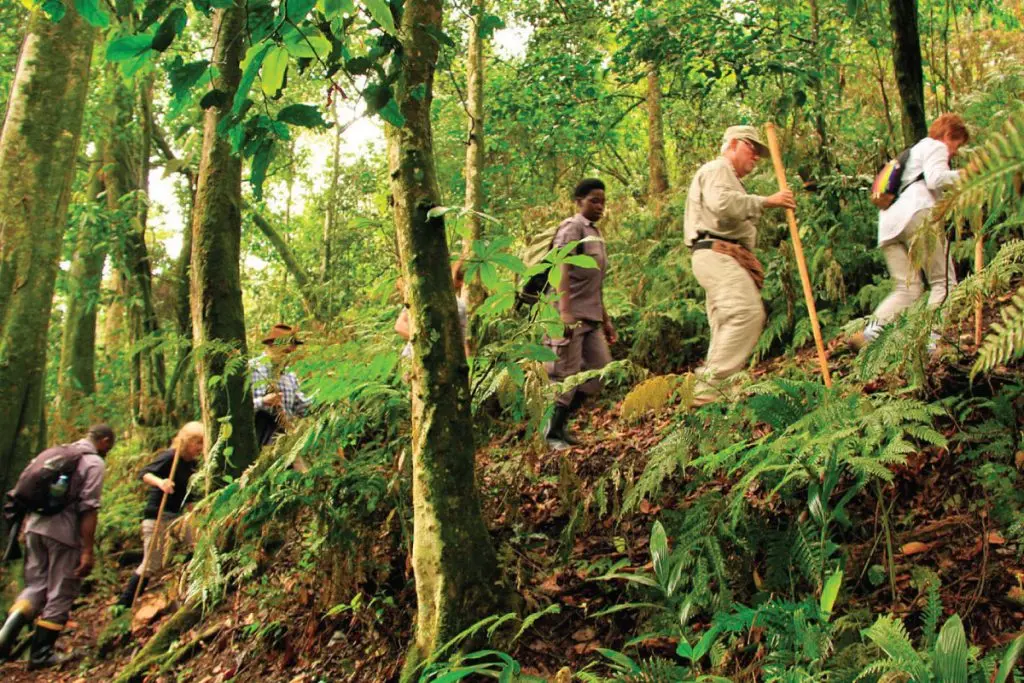
Quick answer: Bwindi Impenetrable National Park is divided into four gorilla trekking sectors — Buhoma, Ruhija, Rushaga, and Nkuringo — and choosing between them comes down to four practical factors: terrain difficulty, travel logistics to reach the sector, number of available gorilla families, and what else you want to combine with your trek. Buhoma, in the north, is the most established and accessible sector with relatively gentler terrain, best for first-time trekkers or those prioritising easy lodge access. Ruhija, the highest-altitude sector, suits travellers combining gorilla trekking with serious birding. Rushaga, in the south, has the largest number of habituated families and is the primary location for the Gorilla Habituation Experience. Nkuringo offers the most dramatic scenery paired with the most physically demanding terrain, suited to fit, experienced hikers. There's no universally "best" sector — the right choice depends on your fitness, itinerary routing, and priorities.
Table of Contents
- Understanding Bwindi's Four Sectors
- Buhoma Sector
- Ruhija Sector
- Rushaga Sector
- Nkuringo Sector
- Full Sector Comparison Table
- Getting to Each Sector
- Accommodation by Sector
- A Simple Decision Guide
- Combining Your Sector Choice With the Rest of Your Itinerary
- Frequently Asked Questions
- Conclusion and Next Steps
- Buhoma: north, most established, relatively easier terrain
- Ruhija: highest altitude, best paired with birding
- Rushaga: south, most families, home of the habituation experience
- Nkuringo: south, steepest terrain, most dramatic views
- All sectors: gorilla permit cost identical at USD 800 regardless of sector chosen
Understanding Bwindi's Four Sectors
Bwindi Impenetrable National Park spans roughly 321 square kilometres of ancient montane and lowland forest in southwestern Uganda, divided administratively into four trekking sectors, each with its own park headquarters, trailhead system, and set of habituated gorilla families. Permit price is identical across all four sectors at USD 800, so sector choice doesn't affect cost directly — it affects terrain, travel logistics, accommodation options, and what you can realistically combine with your trek.
Buhoma Sector
Buhoma, in Bwindi's north, was the park's original gorilla trekking area and remains the most developed in terms of lodge infrastructure and visitor services. Terrain here tends to be relatively gentler compared to the southern sectors, and its families, including Mubare, Habinyanja, and Rushegura, are generally well-established with predictable ranging patterns. Buhoma is a strong choice for first-time trekkers, families, or anyone prioritising a wide range of accommodation options close to the trailhead. For details on which specific families are typically trekked here, see our complete guide to Uganda gorilla families in Bwindi.
Ruhija Sector
Ruhija sits at Bwindi's highest altitude, with correspondingly cooler temperatures and steeper, more demanding terrain than Buhoma. What sets Ruhija apart is its exceptional birding, particularly for Albertine Rift endemic species, making it the natural choice for travellers wanting to combine gorilla trekking with a serious birding component in the same location, without needing to add another destination to their itinerary.
Rushaga Sector
Rushaga, in Bwindi's far south, holds the greatest concentration of habituated gorilla families of any sector — commonly seven or eight — making it both the most flexible sector for last-minute permit availability and the primary location for the Gorilla Habituation Experience, which offers up to four hours with a family still undergoing habituation. Terrain here is moderate to strenuous and varies considerably depending on which family you're assigned.
Nkuringo Sector
Nkuringo, perched on a dramatic ridge along Bwindi's southern edge, is widely regarded as the most physically demanding sector, with consistently steep terrain rewarded by sweeping views over the Virunga volcanic range toward Rwanda and DR Congo. It suits fit, experienced hikers who prioritise scenery and a genuine sense of remoteness over convenience.
Full Sector Comparison Table
| Sector | Terrain | Number of Families | Standout Feature | Best For |
|---|---|---|---|---|
| Buhoma | Moderate | 3–4 | Established infrastructure, easier access | First-time trekkers, families |
| Ruhija | Moderate to strenuous | 3–4 | Exceptional birding | Birders combining interests |
| Rushaga | Moderate to strenuous | 7–8 | Habituation experience, most families | Flexible bookings, photographers wanting extended time |
| Nkuringo | Strenuous | 3 | Dramatic Virunga views | Fit, experienced hikers |
Getting to Each Sector
Buhoma is typically accessed via Kihihi or Kasese airstrips, or a road journey from Queen Elizabeth National Park, making it a natural fit for itineraries routed through Kibale and Queen Elizabeth first. Ruhija is reached via a similar route, slightly further south. Rushaga and Nkuringo are both accessed via Kisoro airstrip or a road route closer to the Rwanda border, making them a natural fit for itineraries that continue on to Rwanda or approach Bwindi from the south rather than via Queen Elizabeth.
Accommodation by Sector
Buhoma offers the widest range of accommodation, from budget guesthouses to luxury lodges, reflecting its status as Bwindi's longest-established tourism area. Ruhija has a smaller but growing range of options, generally mid-range and above given the area's more specialised birding-focused visitor base. Rushaga and Nkuringo have both seen significant lodge development in the past decade and now offer excellent options across most budget categories, though historically had fewer choices than Buhoma.
A Simple Decision Guide
If this is your first gorilla trek and you want the most predictable, accessible experience: choose Buhoma. If birding is a genuine priority alongside gorillas: choose Ruhija. If you want maximum flexibility for permit availability or are considering the habituation experience: choose Rushaga. If you're a strong hiker chasing the most dramatic scenery and don't mind the toughest terrain: choose Nkuringo. If your itinerary is continuing on to Rwanda afterward: Rushaga or Nkuringo's southern location offers a more convenient routing than Buhoma.
Combining Your Sector Choice With the Rest of Your Itinerary
Sector choice should generally follow your broader itinerary routing rather than being chosen in isolation. Itineraries starting in Kampala or Entebbe and moving through Kibale Forest and Queen Elizabeth National Park naturally arrive at Bwindi via Buhoma or Ruhija. Itineraries continuing on to Rwanda after Uganda, or approaching via Kisoro, are better suited to Rushaga or Nkuringo. Discuss your full route with your operator before finalising a sector choice, since backtracking across Bwindi's sectors adds substantial, often unnecessary, road time.
Frequently Asked Questions
1. Which Bwindi sector is best for beginners?
Buhoma is generally considered the most accessible sector, with relatively gentler terrain and the most established infrastructure.
2. Does the sector I choose affect the permit price?
No, the standard gorilla permit costs USD 800 regardless of which of Bwindi's four sectors you trek from.
3. Which sector has the most gorilla families?
Rushaga, with typically seven to eight habituated families, offering the greatest flexibility for permit availability.
4. Which sector is best for birding alongside gorilla trekking?
Ruhija, Bwindi's highest-altitude sector, is well known for excellent birding, particularly Albertine Rift endemic species.
5. Which sector is the most physically demanding?
Nkuringo, with consistently steep ridge terrain, is generally regarded as the most physically demanding of the four sectors.
6. Can I switch sectors after booking my permit?
Generally difficult once a permit is confirmed for a specific sector and date, so it's worth deciding on your preferred sector carefully before booking.
7. Where is the Gorilla Habituation Experience offered?
Primarily in Rushaga sector, which hosts the families still undergoing habituation available for this extended, up-to-four-hour permit.
8. Which sector should I choose if I'm continuing to Rwanda afterward?
Rushaga or Nkuringo, both accessed via routes closer to the Rwanda border, offer more convenient onward routing than Buhoma or Ruhija.
9. Are lodges more expensive in one sector than another?
Buhoma historically offers the widest range across all budgets given its longer tourism history; Rushaga and Nkuringo have expanded significantly in recent years and now offer comparable options.
10. Is one sector more scenic than the others?
Nkuringo is widely regarded as offering the most dramatic views, given its ridge-top position overlooking the Virunga volcanoes.
11. How do I decide between sectors if I have no strong preference?
Let your broader itinerary routing decide — choose Buhoma or Ruhija if arriving via Queen Elizabeth National Park, or Rushaga or Nkuringo if arriving via Kisoro or continuing to Rwanda.
12. Does sector choice affect my chances of a good sighting?
No — sighting rates for habituated families are consistently high across all four sectors; sector choice affects terrain and logistics, not the likelihood of finding the gorillas.
Conclusion and Next Steps
There's no single "best" sector in Bwindi Impenetrable National Park — only the sector that best fits your fitness level, interests, and broader itinerary routing. Buhoma offers accessibility, Ruhija offers birding, Rushaga offers flexibility and habituation access, and Nkuringo offers dramatic scenery for fit hikers. Whichever you choose, the core experience — an hour with a habituated mountain gorilla family — remains equally profound.
Not sure which sector fits your trip best? Contact Nile Abenteuer Safaris and we'll recommend the right sector based on your fitness, dates, and full itinerary.